Brighton Mobility Score
A simple, granular bedside description of a patient’s current functional mobility — from bed bound and hoist dependent through transfers, assisted walking and independent mobility.



A simple visual progression through functional mobility.
Quick
Designed to be completed from direct observation or reliable MDT knowledge of what the patient can safely achieve most of the time.
Granular
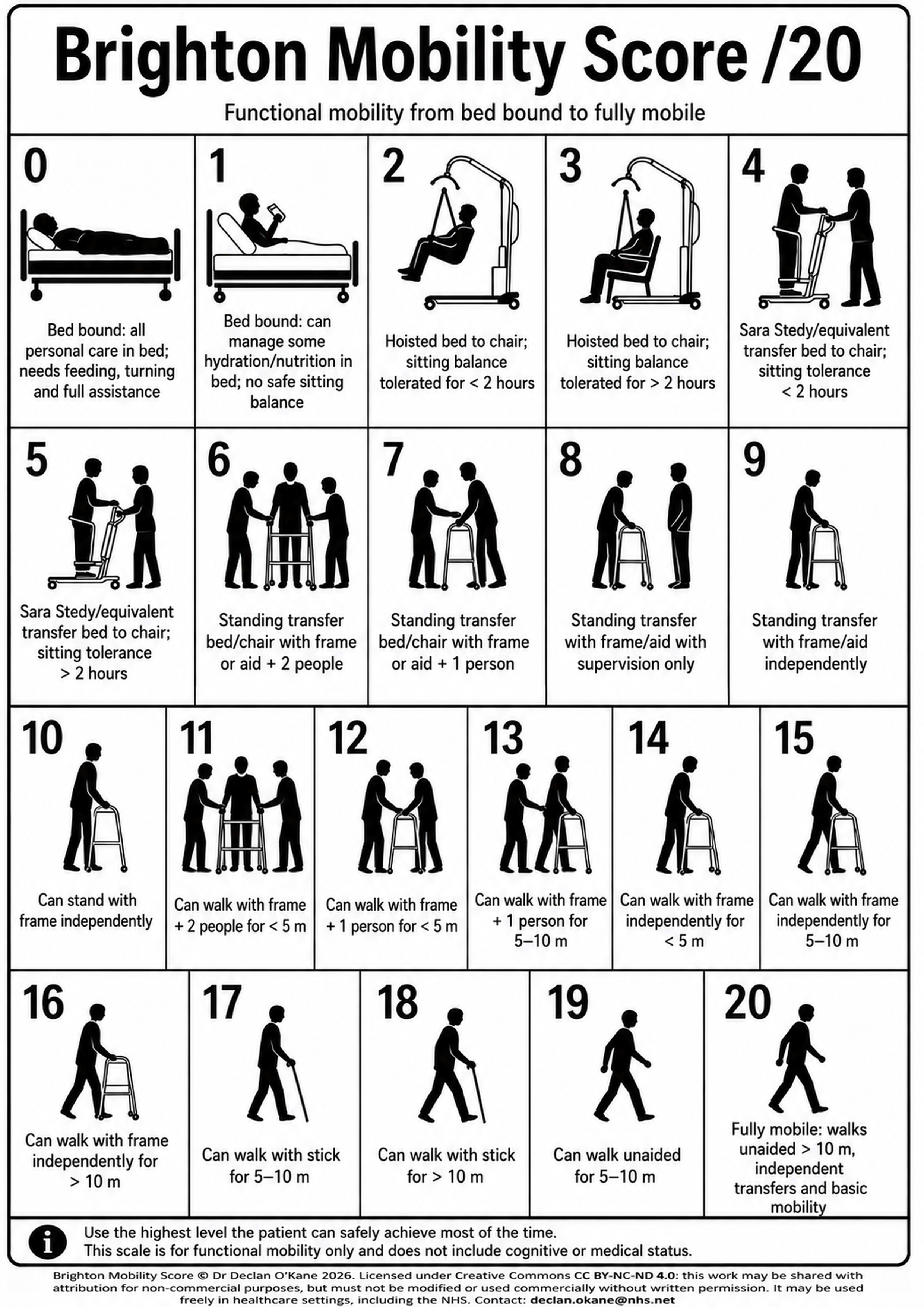
Twenty-one levels distinguish clinically important differences in transfer method, assistance, walking aid and distance.
Longitudinal
Repeated scores can make deterioration, hospital-associated deconditioning and recovery visible during admission.
Translated BMS sheets
Download the Brighton Mobility Score in nine languages, with PDF and PNG versions for printing or sharing.
Follow the BMS over time
The value of the score is not simply the number on one day. Serial measurement can show the trajectory from admission through deterioration, stabilisation, rehabilitation and discharge.
A falling BMS should prompt clinicians to ask why mobility has changed — for example acute illness, pain, delirium, hypotension, medication effects, prolonged bed rest or hospital-associated deconditioning. A rising BMS can provide an objective indication of recovery.
Clinical use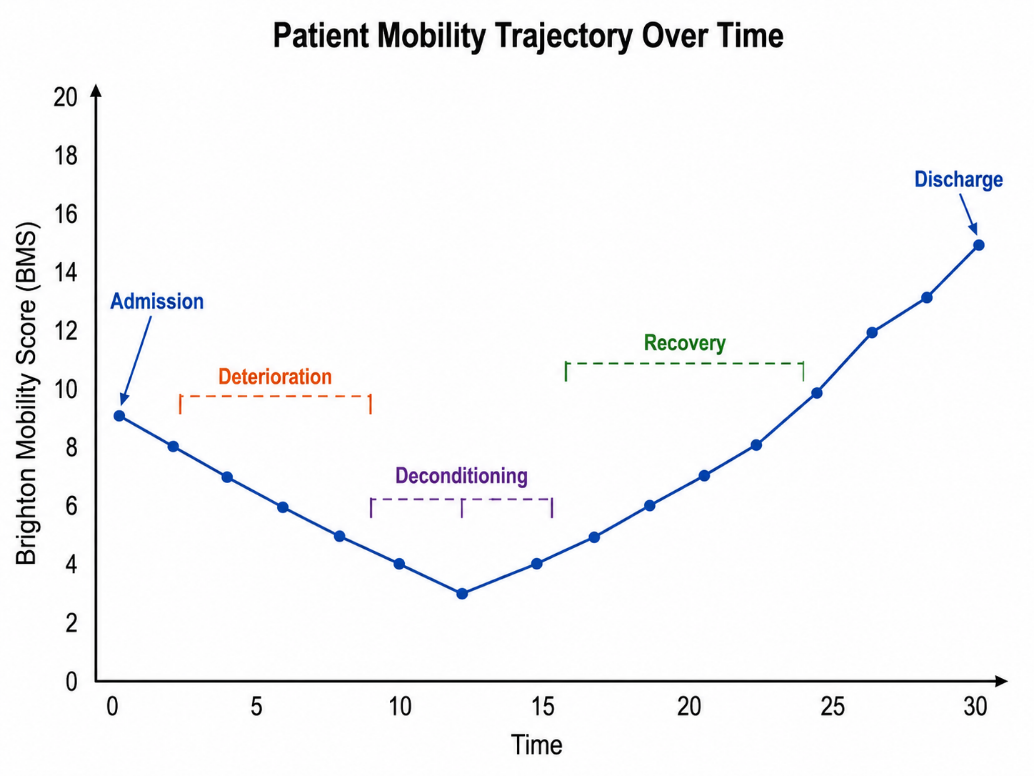
All 21 mobility levels
The full BMS reference chart shows the progression from complete bed-based care to fully independent mobility.
Help us refine the BMS
The Brighton Mobility Score is being developed through a feasibility and service-evaluation pilot in frail hospital inpatients. We are recruiting early adopters and welcome interest from clinical teams. The aim is to obtain practical feedback and fine-tune the score before formal validation, so score definitions or wording may change as the pilot develops.